Security guard services in Thousand Oaks for corporate and biotech campuses in the Conejo Valley, office lobbies along the 101 and 23, retail around The Oaks and Janss Marketplace, and HOA neighborhoods from Newbury Park to North Ranch. Officers are unarmed, registered with California's Bureau of Security and Investigative Services (BSIS), and work from post orders written for your site.
Thousand Oaks buys security differently from most cities its size, for two reasons. It has no police department of its own, contracting law enforcement from the Ventura County Sheriff's Office, and it has no alarm permit scheme either. Instead it fines false alarms directly, on a ladder that reaches $1,000 for a business.
The city publishes the reason plainly: its officers answer roughly 2,900 alarm calls a year, and 99.6 percent of them are false. That is the context every alarm conversation here starts from.
CAL Security Group is licensed as a Private Patrol Operator (PPO) by California's Bureau of Security and Investigative Services (BSIS), and every officer we send is unarmed.

There is no alarm permit to buy here. The city goes straight to a civil fine, and it climbs fast.
| False alarm in the year | Business site | Residential site |
|---|---|---|
| First | No charge | No charge |
| Second | $100 | $50 |
| Third | $200 | $100 |
| Fourth | $500 | $200 |
| Fifth | $750 | $500 |
| Every one after that | $1,000 | $500 |
Fines published by the City of Thousand Oaks. Leave one unpaid and a 10 percent penalty is added after 30 days, then 1 percent a month, with the account going to collections after 90 days. Five or more false alarms in a year brings the city's public nuisance alarm provision into play as well.
A business with a faulty sensor can run up thousands in a single year without a break-in ever happening. An officer with your keys and codes attends first, checks the doors and the perimeter, cancels what turns out to be nothing, and calls the Sheriff's Office when there is a real entry to report.
Large single-tenant campuses with controlled access, laboratories and parking structures. Visitor control, contractor escorts and after-hours rounds, with every entry logged by name and time.
Office security →Office and flex buildings that empty by early evening, often sharing one set of driveways. A single patrol route usually covers several buildings better than an officer parked at one.
Mobile patrol →Regional retail with structured and surface parking. Doorway presence during trading hours, lot rounds after closing, and written reports police and insurers can use, which matters given the organised retail crews working the county.
Retail security →Associations with their own parking, amenity and guest rules. Officers enforce what the board has adopted in writing, close amenities on schedule and log the rest for management.
HOA security →Performances, conferences and civic functions bring crowds and full parking to otherwise quiet blocks. Event officers are quoted by date, covering entrances, parking and the walk back to cars.
Event security →Job sites holding material for months, and houses on large lots against the open space. Night cover while material is exposed, patrol at varied hours for the rest.
Construction security →Thousand Oaks is about 35 miles west of our office at 1208 W Jefferson Blvd in Los Angeles. Other city pages close by, by straight-line distance:
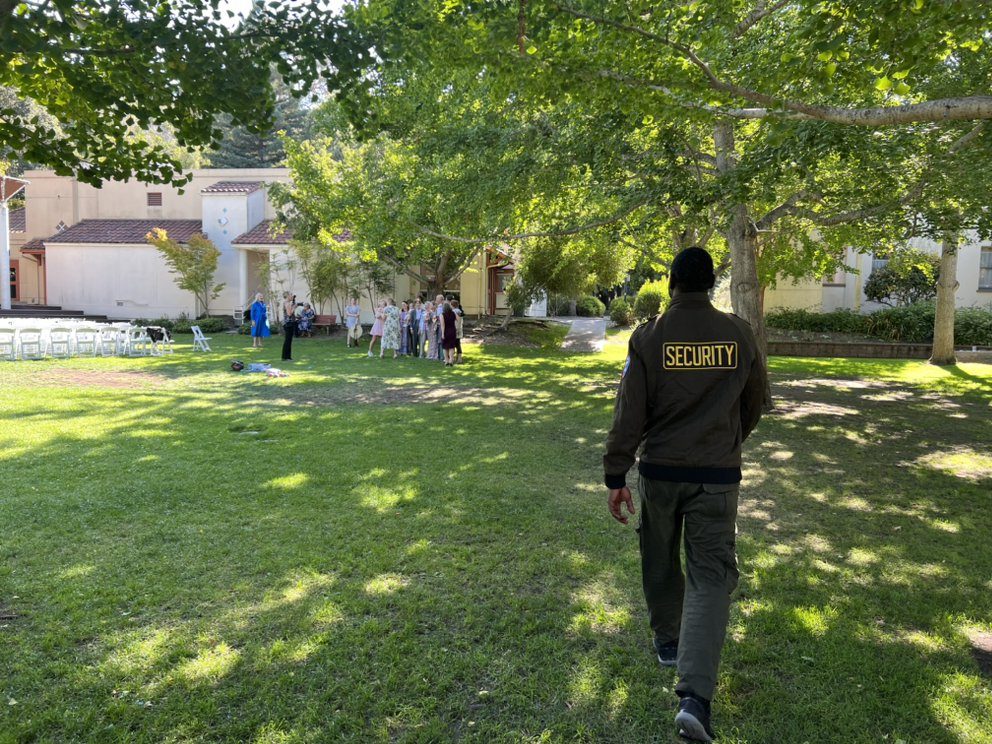
Published market data puts unarmed guard work in California at about $22 to $40 an hour. That is the market, not a CAL Security Group quote. Thousand Oaks has no city minimum wage of its own, so the wage floor is California's $16.90 an hour in 2026.
The Sheriff's Office covers a large contract area, so the practical question here is rarely how fast anyone arrives. It is who is on your property at the hours nobody else is. That means most clients here buy hours in blocks: a campus lobby during business hours, a patrol route overnight, event dates on their own lines, and construction cover only while material is exposed.
The quote shows each of those separately with its hours, so cutting or adding a block is a visible number rather than a negotiation. Our cost guide breaks the ranges down property by property.
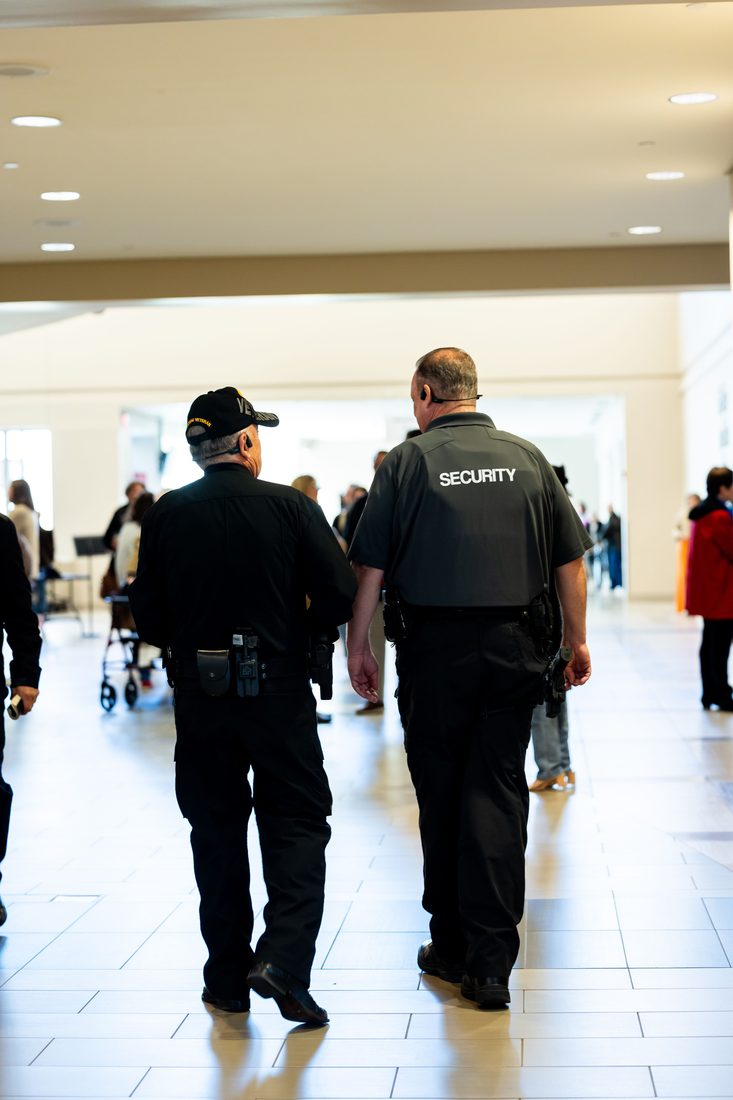
Four false alarms at a business is $800 before anything is stolen. Compare that with a patrol contract before renewing the monitoring.
Tell us about the campus, office, retail center or HOA, which hours need an officer, and any policies officers must follow. We walk the property free and return a written quote for each post.
Get a Free Quote